

Cryptomus Review 2026: Is This Crypto Payment Gateway Legit and Worth It?

Crypto payments have moved from a niche experiment to a mainstream business decision. As a result, the crypto payment gateway market grew from $1.69 billion in 2024 to $2.02 billion in 2025, and projections put it at $6 billion by 2035. And nearly 39% of U.S. merchants now accept cryptocurrency, with 88% pointing to direct customer demand as the reason. Seventy-eight percent of Fortune 500 companies are exploring or piloting crypto payments for international B2B transfers.
That growth has created real demand for platforms like Cryptomus. But market demand is not the same as a reliability guarantee.
This Cryptomus payment gateway review covers what it actually does, its pricing, is it safe and legit, what happened in 2025 on the compliance front, and what it falls short on for businesses with more complex needs.
What Is Cryptomus?
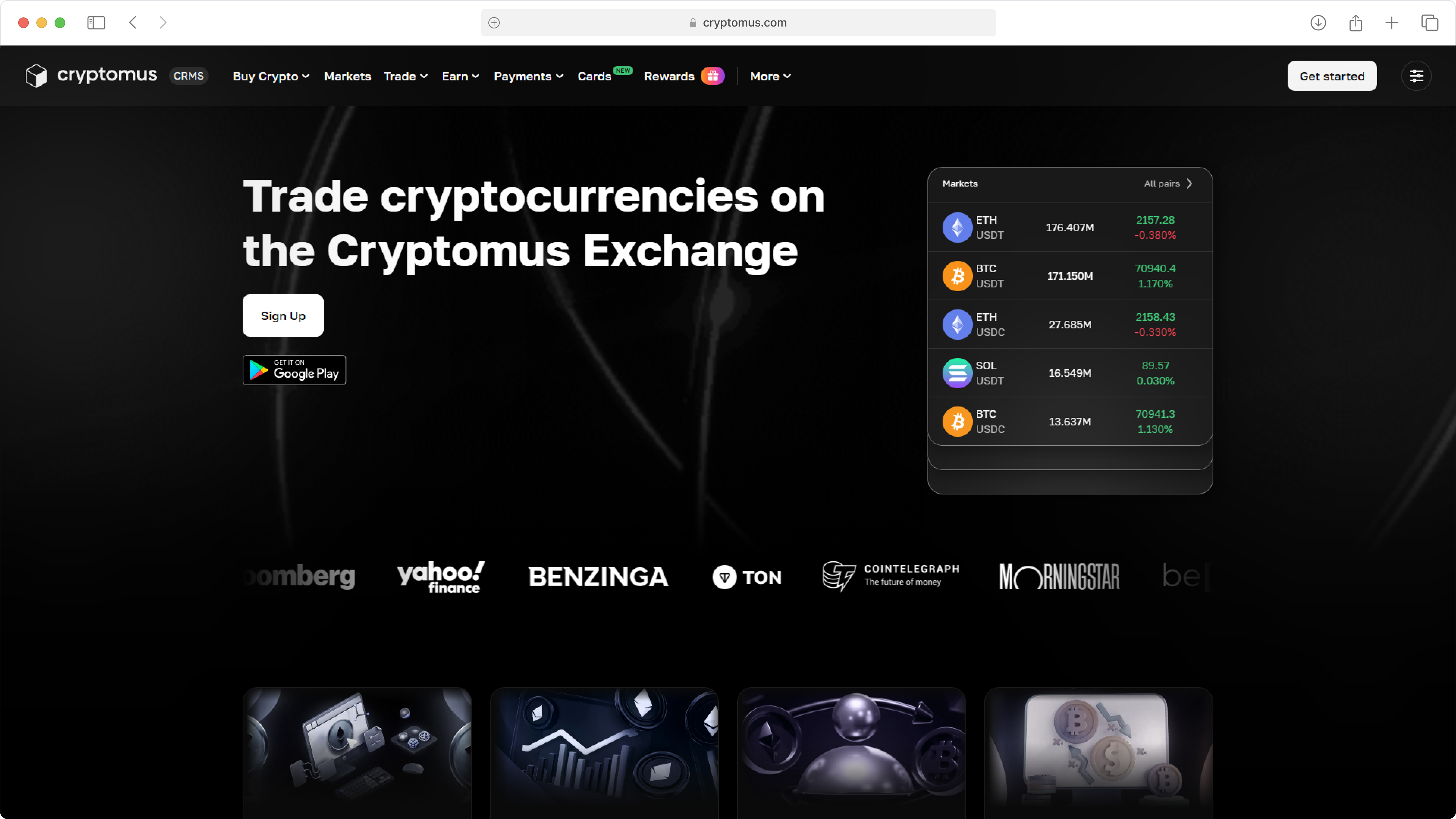
Cryptomus platform is a crypto payment gateway built primarily for freelancers, small businesses, and online merchants. Its core offering covers payment processing, invoicing, and personal wallet functionality.
The Cryptomus crypto payment gateway supports over 100 cryptocurrencies and stablecoins, including Bitcoin, Ethereum, Tether, Solana, TRON, Polygon, Litecoin, Dogecoin, Monero, BNB, USDC, and many others. Supported networks include Arbitrum One, Avalanche C-chain, BSC (BEP-20), ETH (ERC-20), Polygon, SOL, TON, and Tron (TRC-20).
On paper, the asset coverage is broad. For basic merchant use, the range is more than adequate.
Regulatory status is a different story. Cryptomus is registered as a Money Services Business with FINTRAC in Canada. In October 2025, FINTRAC issued a record C$176.96 million penalty against Cryptomus for over 2,500 AML violations. The violations included transactions linked to ransomware, fraud, and Iran sanctions evasion. The British Columbia Securities Commission had already banned Cryptomus from trading securities in May 2025.
That is the compliance context you should consider if you use this platform in 2026.
Cryptomus Payment Gateway Features
Cryptomus offers a standard set of merchant tools. You can accept payments via hosted checkout, payment links, or direct API integration. The Cryptomus API is reasonably well documented, and there are plugins available for common platforms. Cryptomus pay works for freelancers sending one-off billing. Mass payouts let you withdraw to multiple wallets. There is conversion and exchange functionality built in. The merchant dashboard gives you a transaction overview.
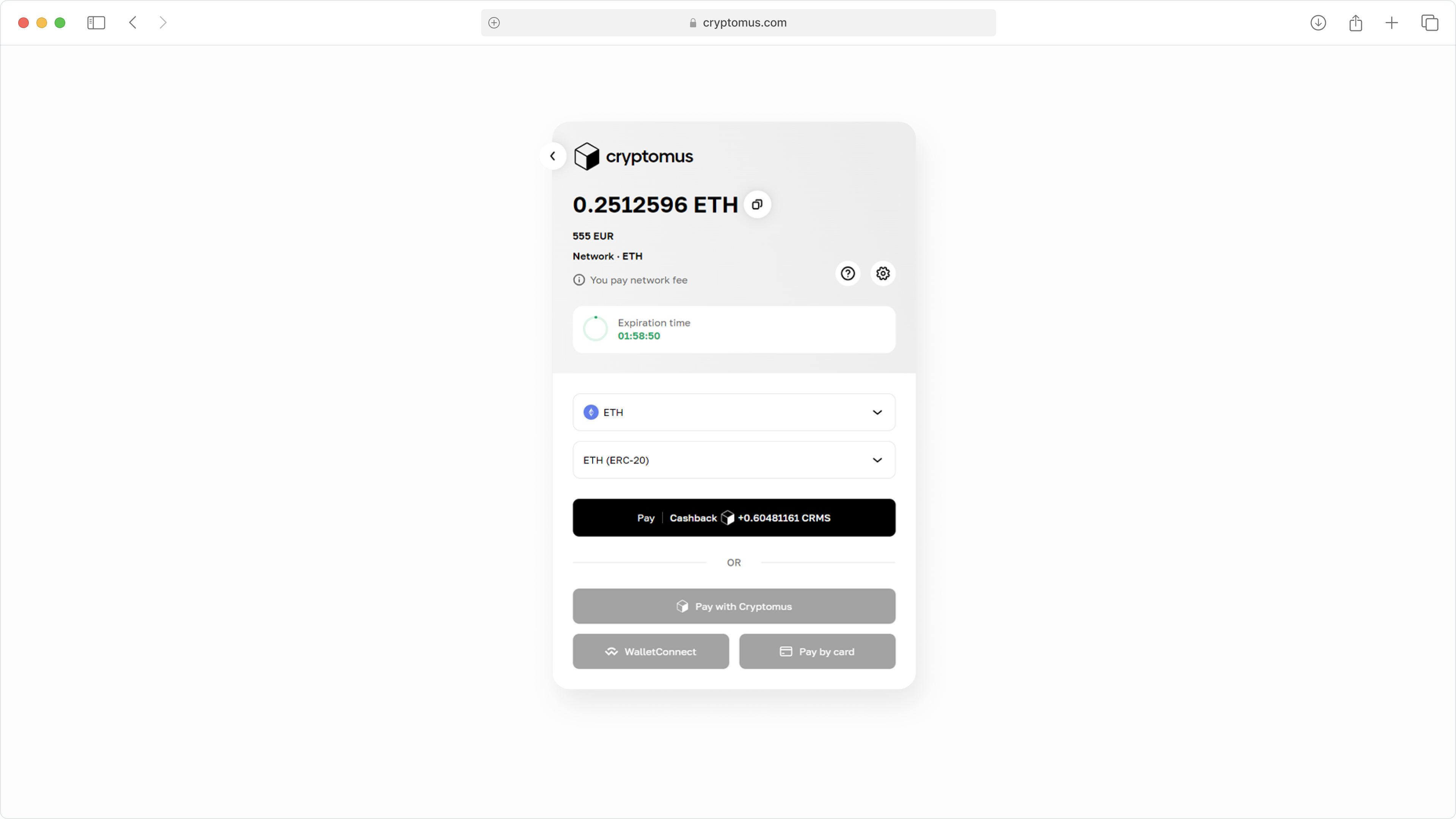
What you do not get is treasury management. There is no multichain portfolio view across accounts, no cashflow reporting, and no audit ready transaction history. If you need to share access with a finance team or set user permissions, the platform has no mechanism for that. Reporting is basic enough that preparing for an audit or year-end reconciliation requires exporting data and building your own view elsewhere.
For a freelancer who needs to get paid in crypto, that is fine. For a business running payroll, managing vendor payments, or handling financial reporting across multiple accounts, those gaps add up.
Cryptomus Fees and Pricing
Cryptomus fees for merchants start at a 2% transaction fee by default. That is not a premium tier rate. That is the starting point for everyone.
To get a lower rate, you fill out a contact form and wait for a manager to reach out. Rates can drop to as low as 0.4% depending on your business type, monthly volume, and integration method. There is no public pricing table showing those thresholds. You will not know what rate you qualify for until after a conversation with their sales team.
Cryptomus charges 0% on withdrawals, but network fees apply and vary significantly by chain. There is no fee estimator in the dashboard, so you check network costs manually before each transfer.
Fiat payments on Cryptomus run through a third-party provider, Mercuryo. If you use this on- and off-ramp, conversion fees apply on top of the transaction rate - costs that are not included in the advertised 0.4% to 2% range.
The practical picture is this. At low volume, you are paying 2% per transaction. At higher volume, you might negotiate down, but the timeline and outcome are opaque. Businesses that need to model payment costs for budgeting or pricing purposes may find that hard to work with.
In short, Cryptomus pricing is flexible but unclear. You may pay anywhere between 0.4% and 2%, plus extra costs on top.
Is Cryptomus Safe?
Cryptomus requires KYC verification and positions itself as AML compliant. The platform uses 2FA and standard encryption. It holds customer funds in a custodial model with no noncustodial option available.
As was already mentioned, the FINTRAC penalty from October 2025 is the central concern. Over 2,500 AML violations, with confirmed links to ransomware proceeds, fraud, and Iran sanctions evasion, resulted in a C$176.96 million fine. That is the largest penalty in FINTRAC's history. The BCSC securities ban predates it by five months.
Beyond regulatory issues, user reports across Trustpilot and SmartCustomer document a recurring pattern. Funds frozen without notice. AML holds are applied without explanation. Support going quiet for days or weeks with no resolution. Multiple merchants report being billed above the agreed transaction rate with no satisfactory explanation from Cryptomus support.
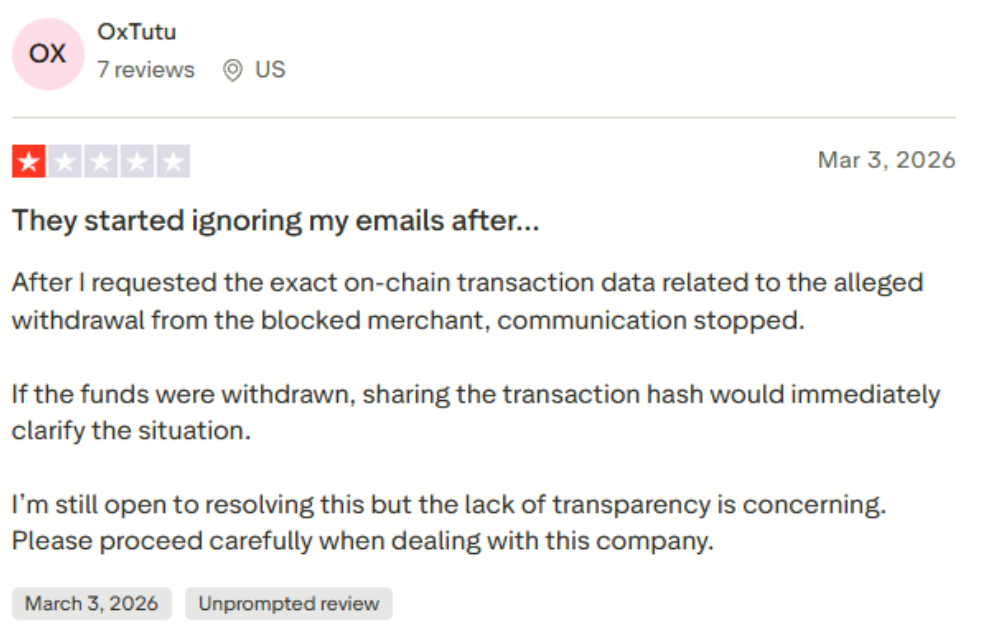
These are not isolated one-star reviews. They describe a consistent operational problem with fund availability and support responsiveness.
Is Cryptomus legit? It is a real platform processing real transactions. But the compliance record and user complaint pattern may represent genuine counterparty risk for any business that depends on predictable fund access.
Cryptomus Payment Gateway Pros and Cons
What works
- Cryptomus app is easy to set up. The barrier to entry is low, and you can start accepting crypto payments quickly without a lengthy onboarding process.
- The platform has real transaction history behind it. Cryptomus has been operating since 2022 and is actively used by businesses globally. It is not a new entrant with unproven infrastructure.
- The range of supported coins is wide. For a freelancer or small merchant who wants to accept Bitcoin or stablecoins without complexity, it does the job.
What does not work
- The 2% default rate is high relative to alternatives, and the path to lower rates requires negotiation with no guaranteed outcome.
- Financial tooling is absent. There is no treasury layer, no team management, no multiuser access, and no reporting that a finance function could actually use.
- The compliance record adds operational risk. Businesses that process significant volume or work in regulated industries face real exposure partnering with a platform carrying a C$176.96 million AML penalty into 2026.
Who it works for
Cryptomus gateway is a reasonable choice for freelancers and small merchants who need a quick, low-friction way to accept crypto with minimal setup.
Where it falls short
It is the wrong tool for businesses operating at volume, businesses that need transparent pricing, teams that share financial access, anyone who needs audit ready reporting, and any company where a counterparty's compliance record matters to their own risk management or banking relationships.
Cryptomus Alternative: Why Monocrypt May Work Better for Business Crypto Finance
If your business has grown past basic payment acceptance, Cryptomus leaves a real gap. No treasury control, no multiuser management, no financial reporting, custodial only, and a compliance record that creates counterparty risk. That is the actual product you are evaluating.
Monocrypt is built for what comes next.
Pricing you can see before you sign up
Monocrypt's pricing is public. The Starter plan costs $0 and includes $100,000 in prepaid volume at 0.5% per transaction. Growth drops to 0.35% with $500,000 in volume included. Pro is 0.25% with $1 million included. Enterprise comes in at 0.20%. No sales calls required, no manager approval, no waiting. You can model your actual costs before you commit.
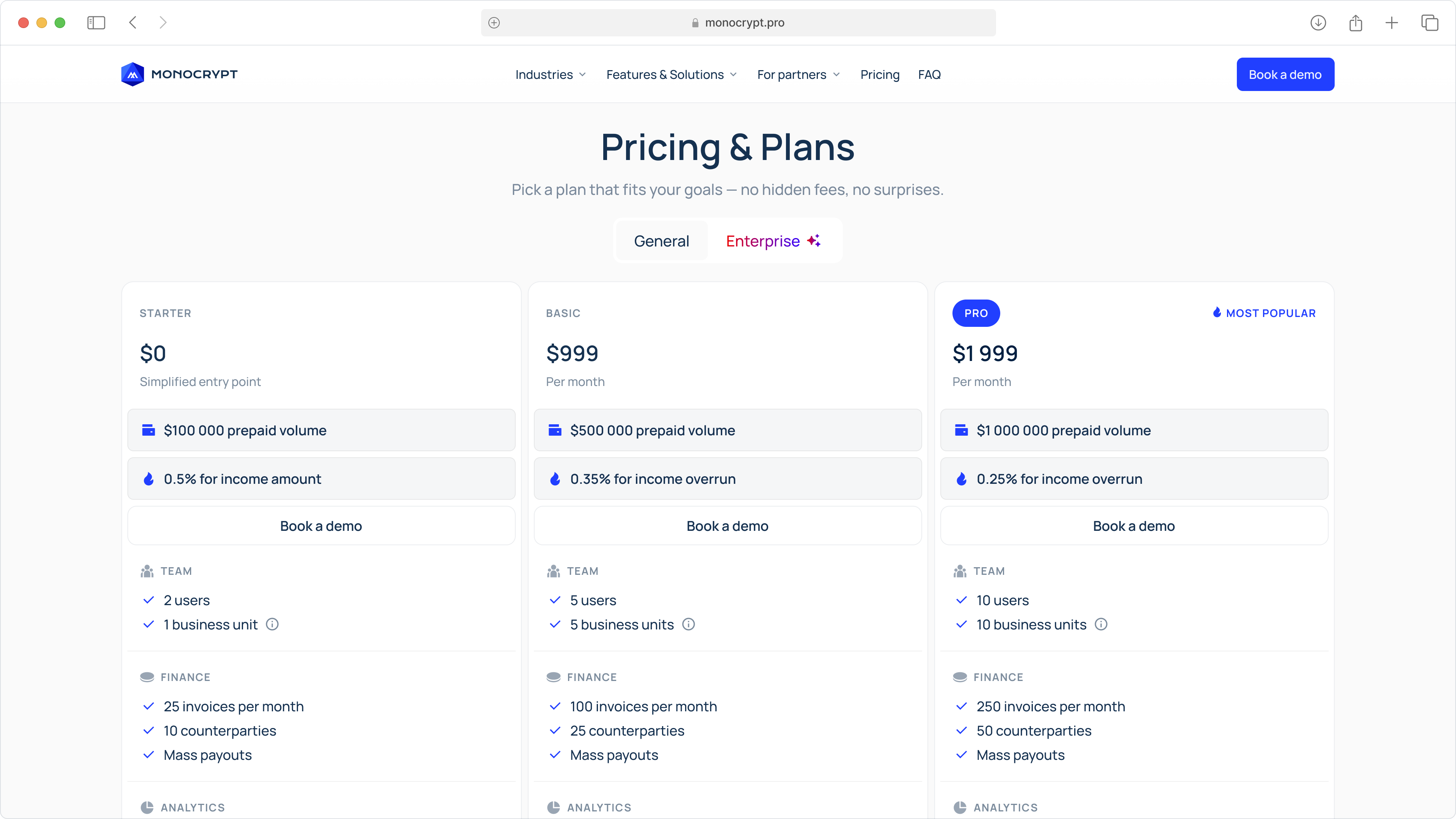
Compare that to Cryptomus's opaque 0.4% to 2% range where you start at 2% and negotiate down only after applying.
Mass payouts that scale
Monocrypt batches over 1,000 transfers into a single on-chain transaction at one network fee. At volume, the cost difference between that and paying a separate network fee per transfer is significant. Asset coverage runs to 300-plus cryptocurrencies across all major blockchains from one hub.
Team management built in
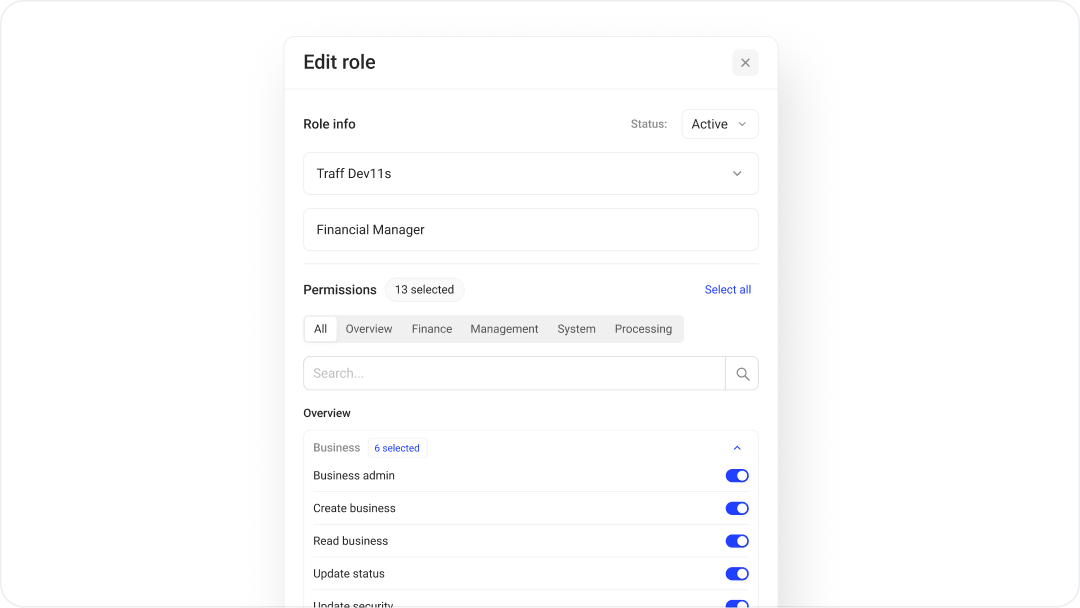
Monocrypt includes granular role and permission controls from the start. You can assign access levels, restrict actions by team members, and trigger emergency blocks when needed. Cryptomus has no equivalent.
Reporting that finance teams can use
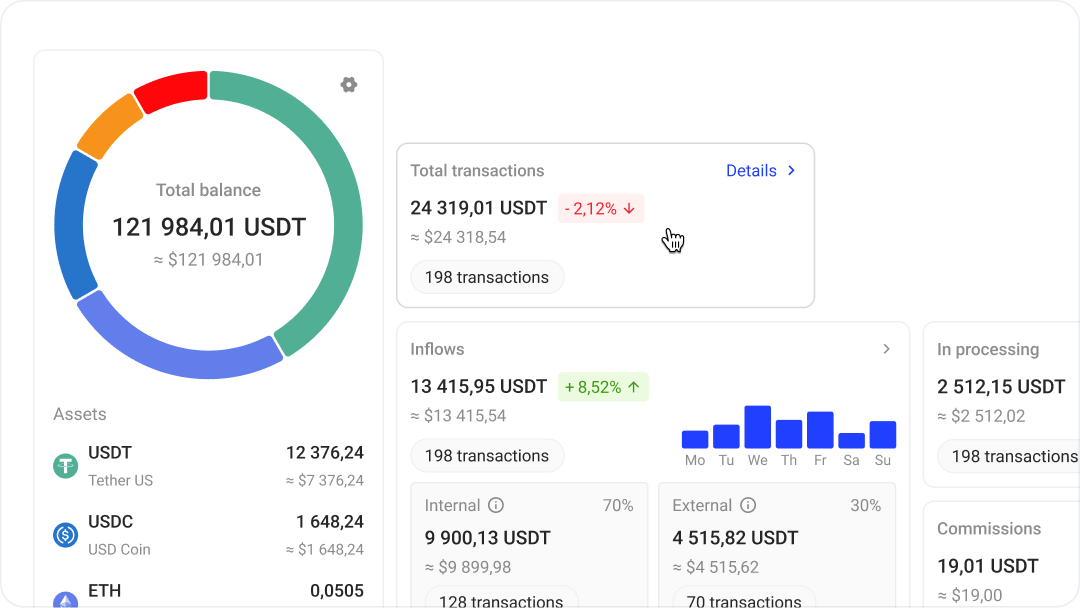
Monocrypt provides cashflow statistics, balance sheet views, and transaction history across all accounts in formats that support audit and reporting workflows. Cryptomus offers none of that.
Custody options
Monocrypt defaults to institutional grade infrastructure and offers a non-custodial setup on request for teams that need full self-sovereign control. Cryptomus is custodial only with no alternative available.
Compliance
Monocrypt's regulatory record is clean. Cryptomus carries a C$176.96 million FINTRAC penalty and a BCSC securities trading ban into 2026.
Side-by-side comparison
Monocrypt's regulatory record is clean. Cryptomus carries a C$176.96 million FINTRAC penalty and a BCSC securities trading ban into 2026.
| Cryptomus | Monocrypt | |
|---|---|---|
| Transaction fees | 2% default, 0.4% after negotiation | 0.20% to 0.50%, publicly listed |
| Pricing transparency | Opaque | Full public pricing table |
| Treasury management | No | Yes |
| Team roles and permissions | No | Yes |
| Financial reporting | Basic | Cashflow, balance sheet, audit ready |
| Custody | Custodial only | Institutional grade, noncustodial available |
| Compliance record | C$176.96M FINTRAC penalty, BCSC ban | Clean |
| Supported assets | 100+ | 300+ |
Conclusion
Cryptomus is a functioning crypto payment gateway. If you are a freelancer or small merchant who needs to accept crypto quickly and your volume is low, it works.
For businesses managing real financial operations, the math does not hold up. You start at 2% with no guarantee of a lower rate. You get no financial reporting. You share a platform with a counterparty carrying the largest AML penalty in Canadian regulatory history. You cannot add a finance team member without sharing full account access.
That is a meaningful set of limitations for anyone running a serious business.
Monocrypt was built to fill exactly that gap. Transparent pricing, real financial tooling, team management, and a clean compliance record. If you have outgrown basic payment acceptance, it is the next step.